
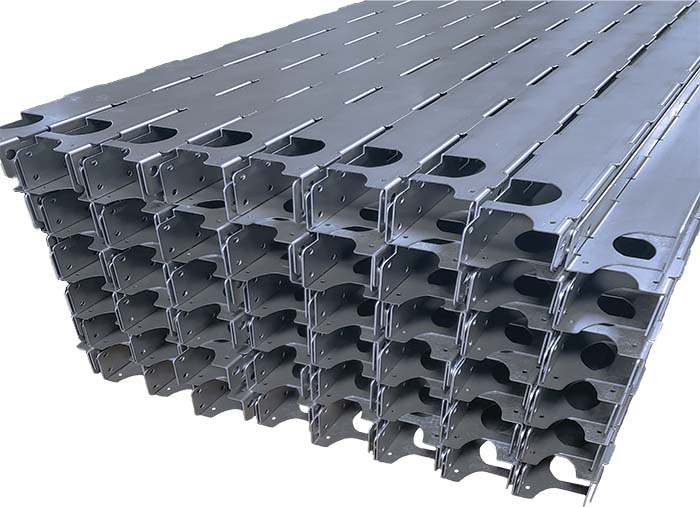
For a lot of stamped metal parts, aluminum and steel both get the job done when it comes to everyday strength and durability. We’re not talking about aerospace components or high-performance industrial systems where every material choice is tightly controlled. Instead, we mean more straightforward applications where you have some flexibility in what you use, like door and window hardware or the stamped parts that go into electrical transformers and roadside network boxes. In these cases, choosing between aluminum and steel usually comes down to practical considerations like cost, weight, and corrosion resistance rather than strict engineering requirements.
Assuming your product design allows for using a comparably priced aluminum alloy (i.e. aluminum can meet your basic requirements in strength, stiffness, fatigue/wear resistance, etc.), a major advantage of aluminum vs. steel is lightweighting. It’s no secret that aluminum stampings are typically lighter than their steel counterparts; however, many customers do overlook just how much of an advantage that truly is.
Optimizing Your Metal Stamping Project: Why Go Lightweight Whenever Possible
Lighter Parts = Lower Shipping Costs
This one’s huge: weight directly impacts logistics expenses. Whether you’re shipping finished goods to distributors or components to an assembly facility, a reduction in weight translates to fewer freight costs. When multiplied across thousands of parts per month, this can quickly add up to significant savings in your supply chain.
Easier Handling = Easier Assembly
Are you producing metal stampings that go into a larger assembly down the line? From a shop floor standpoint, lightweight parts are easier to move, position, and assemble. For high-volume assembly environments, that minor difference in part weight can majorly improve ergonomics and reduce worker fatigue over the course of a long workday.
Improving the End-User Experience
Are you manufacturing products for any of the many consumer markets? In consumer applications, weight matters more than most people realize. A lighter hinge, bracket, or hardware component all add up and result in easier handling for the end user. That can mean anything from smoother operation of a door handle to easier installation of a fixture, as well as reduced shipping and handling weight along the way.
Embracing Sustainable Manufacturing
Lightweighting has become one of the key strategies in sustainability initiatives across industries. Lighter weight aluminum parts help reduce carbon emissions indirectly by lowering fuel consumption in shipping and transportation. On top of that, aluminum is one of the most recyclable materials in use. Choosing aluminum stampings means more of your product is likely to remain within a closed-loop material cycle, rather than ending up as waste – especially compared to specially coated steels which are more likely to be thrown out.
The Mitchell Metal Products Metal Stamping Advantage
At Mitchell Metal Products, we’ve been stamping quality aluminum and steel parts since 1954 – more than 70 years of superior Made in the USA quality. Our team works closely with customers to evaluate material options and recommend the best balance of performance, cost, and manufacturability. Whether you’re designing a consumer hardware product, industrial component, or other stamped assembly, reach out and we can help determine if aluminum stamping makes sense for your application.